Otoplasty for prominent ears
How Australian consultations discuss prominent-ear surgery in children and adults — timing, cartilage, head-band aftercare and the return to school or sport as matters for the operating surgeon, not a website timetable.
Priya Menon, Features writer · 19 August 2024 · 7 min read · Updated 1 November 2025
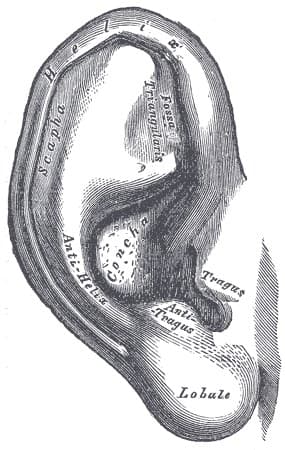
Prominent ears are a small piece of anatomy with an outsized social life. Children notice them in photographs and in the swimming pool. Adults notice them when they wear their hair up, or when a pair of glasses will not sit. The operation that repositions or reshapes the external ear — otoplasty, sometimes called pinnaplasty — is among the older procedures in the plastic-surgery repertoire. It is also one of the easier operations for a website to oversell, because the goal sounds simple: set the ears back.
The ear is cartilage covered by thin skin, with a folded landscape of named ridges (helix, antihelix, concha, lobe) that either formed fully or did not. Surgery can change some of those folds and the angle at which the ear stands out from the skull. It cannot promise symmetry to the millimetre, and it cannot promise that a child will never be teased about something else. This is a journalist’s explainer for Australian readers, not a booking tool. It sits in our facial surgery hub beside other operations on the head and neck.
What the consultation is actually looking at
A useful first visit is less about a target photograph and more about a description. Which part of the ear bothers the person — a poorly formed antihelical fold, a deep conchal bowl, a protruding lobe, or an asymmetry between sides? Has there been previous trauma, piercing damage, or an earlier operation? Does the person wear hearing aids or heavy glasses? In a child, can they describe the concern in their own words, or is the appointment driven only by an adult?
Those questions matter because technique follows anatomy. Some operations rely on sutures that hold a new fold. Some reduce or reshape cartilage. Some do both. Incisions are commonly hidden behind the ear; that is a generalisation, not a promise about a scar you cannot see. Cartilage has “memory”: it can try to return toward its previous shape, which is one reason aftercare and the possibility of revision enter the consent form. Revision is not a scandal. It is a recognised part of operating on a springy tissue.
The conversation should also cover what will not change. Hearing, the inner ear, and the child’s personality are not surgical targets. An adult who wants ears to match a celebrity photograph needs the same mismatch-of-expectation talk as any other cosmetic consult. Informed consent for cosmetic procedures is not a signature at the bottom of a tablet. It is a process that should leave the person able to explain the operation, the alternatives (including doing nothing), and the complications in ordinary language.
Children, adults and the question of timing
Otoplasty is unusual among facial operations because it is regularly discussed for school-age children as well as for adults. The external ear reaches much of its adult size relatively early, which is why families sometimes hear that a child may be anatomically ready in the early school years. “May” is doing a lot of work. Readiness is not only cartilage. It is whether the child can cooperate with dressings, report pain, and understand — at an age-appropriate level — that surgery involves a hospital, an anaesthetic and a period of looking bruised.
Australian practice also sits inside ordinary paediatric ethics. A parent or guardian consents. The child’s assent still matters. Operating to satisfy a parent’s aesthetic preference when the child is unconcerned is a different ethical object from operating because the child is distressed by their ears. Surgeons who do this work regularly will say so. A second opinion is appropriate if the family feels hurried.
Adults arrive with a different history. They have lived with the ears, chosen hairstyles around them, and can give a clearer account of trade-offs. Their cartilage is stiffer. Aftercare still involves protection of the repair; it is not a trivial lunchtime procedure because the patient can drive themselves home in theory. Anaesthetic planning, medicines that affect bleeding, and smoking status belong in the adult work-up as they would for any operation.
Public and private pathways differ. Some children are seen in public paediatric or plastic-surgery clinics when the concern is judged to meet that service’s criteria; those criteria are set by the hospital and the state, not by this journal. Private care has shorter or longer waits depending on the practitioner and the hospital. Neither pathway is a verdict on whether surgery is a good idea.
Cartilage, the theatre and what “set back” means
The operation is usually discussed as day surgery, under general anaesthesia in children and under general or other anaesthetic arrangements in adults, in a licensed facility with an appropriate anaesthetist. The detail is local. What is consistent is that cartilage work and skin closure need a clean field, lighting, and a plan for if bleeding or a reaction occurs.
In general terms, the surgeon may recreate or strengthen the antihelical fold so the ear sits closer to the head, reduce a prominent concha, or adjust the lobe. Permanent or long-lasting sutures are often part of the story. Cartilage may be scored or thinned so that it bends more willingly. Each manoeuvre has a complication attached to it: a suture can pull through; a fold can be over- or under-corrected; a sharp edge can be felt; skin can be slow to settle over a new contour. Infection, bleeding, abnormal scarring, numbness, and the need for further surgery are names that should appear in writing.
Asymmetry deserves a plain sentence. Faces and ears are not mirrored to factory tolerance before surgery, and they will not be afterwards. A consult that pretends otherwise is not a consult. Photographs in clinic — clinical photographs, not social-media tiles — help the surgeon and the patient agree on which features are in scope. This journal does not publish before-and-after images and will not describe a “usual result”.
Pain is typically discussed as moderate in the first days and managed with a plan the surgeon and anaesthetist agree. Sleeping positions, washing hair, and how to handle glasses are practicalities that sound small in the rooms and large at 6 a.m. on day two. Write them down.
Head-bands, school and sport — in general terms only
Aftercare is where otoplasty lives or dies in the popular imagination: the head-band. Many protocols use a bulky dressing for a short period and then a softer supportive band, often at night, to protect the repair while swelling settles and while the person is most likely to roll onto the ear. How many days of dressing, how many weeks of a band, and whether the band is worn in the daytime as well are not facts a website should fix. They vary with technique, age and the surgeon’s experience of their own complications. Treat any number you read here as a prompt to ask, not as a schedule to follow.
School and sport are the two questions families actually care about, and they are discuss-with-the-surgeon questions. A return to the classroom is not the same as a return to rugby, judo, soccer headers, swimming squad or a helmeted sport. Playgrounds are full of elbows. A written, dated plan from the treating team — and a conversation with the school if the child will need to sit out sport — is the document that protects the repair. Adults need the same honesty about gym classes, cycling and occupations that put the ear at risk (helmets, telephone headsets, contact work).
Sleeping on the operated ear, pulling a jumper over the head, and wearing tight hats are the domestic hazards. So is removing the band because it is itchy. If the band leaves a mark, slips, or the ear becomes suddenly more painful, hot, or swollen, that is a reason to call the treating team rather than to adjust the plan on a forum.
Risk, regret and how to keep the decision with the patient
Complications are uncommon in published series and not rare enough to skip. Haematoma, infection, wound breakdown, recurrence of prominence, an unnatural sharp fold, suture problems, and keloid or hypertrophic scarring (more often discussed in people with a personal or family history of those scars) belong on the form. Anaesthetic risk is the background of every paediatric operation and should be explained by the anaesthetist, not waved away as “just a quick one”.
Regret has a particular shape in this operation. An adult who waited twenty years usually knows why they are there. A child may later be glad, or may later wish they had been left alone until they could choose. That uncertainty is not a reason to refuse every paediatric request, and it is not a reason to rush. It is a reason to go slowly enough that the child’s voice is audible.
Check the practitioner on the Ahpra register. For a child, ask how many otoplasties that surgeon performs in this age group, where the operation is done, and who covers after-hours review. Ask what happens if one ear needs a revision and the other does not. Ask whether a psychologist or child-life specialist is available in the service if the child is anxious. None of those questions is rude.
Otoplasty is a focused operation on a focused piece of anatomy. Done after a careful, unhurried consent it can be an appropriate option for some children and some adults. It is still surgery on the head, with an anaesthetic, a scar and a period in which the ear must be protected. The head-band is not a fashion accessory. The return to sport is not a guess you collect from other parents at the gate. Take both back to the surgeon who will be responsible when something does not look right on a Sunday night.
Questions readers ask
- Is otoplasty only for children?
- No. The operation is discussed for children, adolescents and adults. Cartilage is more pliable earlier in life, which is one reason timing comes up in paediatric consults, but adult requests are ordinary. Suitability is an individual assessment.
- When do surgeons usually consider operating on a child?
- After the external ear has reached much of its adult size and the child can take part in the aftercare conversation. Families often hear a school-age window discussed; the precise timing is a clinical judgement involving the surgeon, the child and the parent or guardian, not a calendar rule published here.
- Will a head-band be required afterwards?
- Many aftercare plans include a dressing and then a supportive head-band for a period, especially at night. How long, how tightly, and what to do if it slips are instructions from the operating surgeon. This article does not prescribe a brand or a number of weeks.
- When can a child go back to school or sport?
- That is a discuss-with-the-surgeon question. School return and sport, swimming or contact activities sit on different risk clocks. A written plan from the treating team is the document that matters, not a general range on a website.
- Does otoplasty change hearing?
- Otoplasty is an operation on the shape and position of the external ear, not on the hearing apparatus in the middle or inner ear. Any change in comfort, sensation or the way glasses sit should still be raised if it appears, because unexpected symptoms deserve review.
More in this hub
Chin and jaw surgery, including genioplasty
Genioplasty, chin implants and orthognathic jaw surgery are different operations. This explainer covers occlusion, joint planning with orthodontics, and why a hospital stay is part of the conversation for some — but not all — of these procedures.
Tom Hale · 3 September 2024
Facelift surgery, candidacy and recovery
A journalist’s guide to how Australian rooms discuss facelift candidacy, SMAS versus skin-only approaches, neck work, anaesthesia and haematoma risk — with recovery described as ranges, not promises.
Priya Menon · 5 August 2024
Blepharoplasty — eyelid surgery considerations
Upper and lower lids, dry eye, vision assessment, and the Medicare rules that apply only when clinical criteria are met. No promised look, and a reminder of when eyelid symptoms need urgent care.
Priya Menon · 22 July 2024