Blepharoplasty — eyelid surgery considerations
Upper and lower lids, dry eye, vision assessment, and the Medicare rules that apply only when clinical criteria are met. No promised look, and a reminder of when eyelid symptoms need urgent care.
Priya Menon, Features writer · 22 July 2024 · 10 min read · Updated 1 December 2025
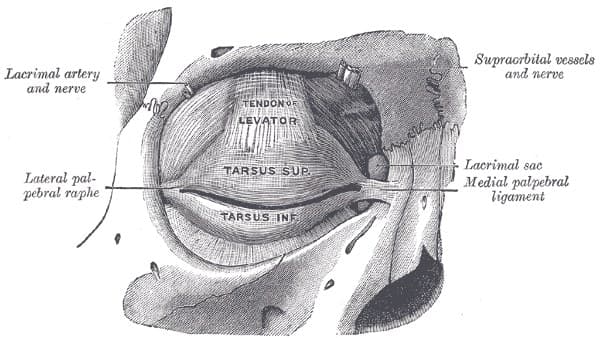
Eyelid surgery sits in an awkward place in public conversation. It is discussed as a refresh and billed, in some cases, as a reconstructive act. The same skin fold that a photograph treats as tiredness can, in another person, sit on the lashes and interrupt the visual field. Medicare has tried to write that difference into an item number. Advertising has tried to write it out. A careful consultation has to put it back.
This essay covers upper and lower blepharoplasty as they are commonly discussed in Australia: the tissues involved, the dry-eye problem, the vision assessment that still matters even after visual-field tests stopped being mandatory for one Medicare item, and the limits of what an operation can be asked to do. It sits in the facial surgery hub. It does not promise a particular crease or a rested expression. For neighbouring operations see facelift candidacy and recovery. For the difference between expected swelling and an emergency, see when to seek urgent care.
Upper lids, lower lids, and what is not blepharoplasty
Upper blepharoplasty is, in plain language, a reduction or reshaping of extra skin — and sometimes muscle or fat — in the upper eyelid. Lower blepharoplasty addresses bags, skin and fat in the lower lid. Those sentences are already too neat. Fat that looks like a bag on a photograph may be orbital fat that is supposed to cushion the eye. Removing it can hollow a lid years later. Skin that looks like surplus may be the only cover an eye has if the lid is loose.
Ptosis is a different diagnosis: a droop of the lid margin caused by the levator mechanism, not only by extra skin. Brow ptosis is different again: forehead descent that pushes skin onto the lid. Operating on the lid when the brow is the driver is a mismatch. A practitioner who does not examine the brow, the lid margin and the surface of the eye is not yet doing an eyelid assessment. They are looking at a photograph.
The tarsal plates — the firm bands in each lid — and the medial and lateral canthal tendons are the scaffolding. Gray’s 1918 plate of those ligaments is still a useful reminder that this is a small, specialised field. The margin of the lid, the puncta that drain tears, and the orbicularis muscle that closes the eye are easy to injure and hard to discuss in a language of “refreshment”.
Asian eyelid anatomy, a low crease, and previous lid surgery are not complications. They are reasons the plan cannot be copied from a general gallery. This journal does not publish those galleries, and a consultation should not depend on them.
Dry eye is a preoperative problem
The eyelids spread and drain the tear film. Any operation that changes how completely a lid closes, how the puncta sit, or how the orbicularis blinks can make a borderline dry eye into a daily one. Symptoms include grittiness, burning, paradoxical watering, blurred vision that clears with a blink, and intolerance of wind or screens.
Say so if you already use lubricating drops, have been told you have blepharitis or meibomian-gland disease, wear contact lenses for long hours, or have had laser refractive surgery. Say so if you take medicines that dry the surface — some acne treatments, some allergy and antidepressant medicines. Say so if you live with autoimmune disease that involves the eyes.
A responsible practitioner may send you to an optometrist or ophthalmologist before they will operate. That is not an upsell. It is a way of documenting the surface you are starting from. If the surface is already angry, the aesthetic discussion should wait. Lubrication, lid hygiene and time are treatments. They are also, sometimes, the entire plan.
Lagophthalmos — incomplete closure — and ectropion — an outward turn of the lid — are named risks of taking too much skin or of failing to support a lower lid. They are not theoretical. They are reasons a conservative resection can be the more specialised choice.
Vision, fields, and what still has to be examined
Even when a rebate is not being sought, vision belongs in the work-up. A new lid operation is a poor moment to discover that a field defect is coming from the optic nerve, or that a droop is myasthenia, or that a bag is a lesion rather than fat. The eye itself, the pupil, and the way the lid moves should be looked at.
Visual-field testing used to sit in the Medicare descriptor for upper-eyelid reduction. From 1 November 2022, item 45617 no longer requires a field test confirmed by an optometrist or ophthalmologist. The descriptor now speaks of a history of demonstrated visual impairment, among other listed indications, and of photographic or diagnostic imaging evidence kept in the notes. Explanatory note TN.8.103 still talks about photographic evidence of skin prolapsing over the lashes in a relaxed, straight-ahead gaze and causing visual-field obstruction. The test was removed as a mandatory hoop. The clinical idea — that this is a functional problem, not a dislike of creases — remains.
An ophthalmologist or optometrist may still be the right person to document vision, surface disease and, where it would change the plan, fields. Plastic surgeons and oculoplastic surgeons both operate on lids in Australia. Titles still have to be checked on the Ahpra register. “Oculoplastic” is a description of a caseload, usually sitting inside ophthalmology specialist registration. It is not a reason to skip the listing.
Medicare only when the criteria are met
Item 45617 is upper-eyelid reduction for specified indications: a history of demonstrated visual impairment; intertriginous inflammation of the eyelid; herniation of orbital fat in exophthalmos; facial-nerve palsy; post-traumatic scarring; or a symmetry procedure on the other lid when one of those conditions has been treated. Photographic or imaging evidence must be in the notes. Item 45620 exists for lower lids under its own rules. The Schedule changes; the operating practitioner and the Department of Health’s current text are the sources of truth, not a clinic brochure and not this paragraph.
Two facts do not change with the fee. Medicare benefits are not payable for non-therapeutic cosmetic services. Meeting a descriptor is a billing and eligibility question, not a promise that the operation will feel worth it. Private health insurance, if it pays theatre or accommodation, follows the item and the policy, including waiting periods and exclusions for cosmetic treatment.
A rooms that talks about “getting it through Medicare” as a sales line is asking you to treat an audit trail as a favour. Ask for the item number in writing. Ask what happens if a claim is rejected. Ask which part of the quote remains if no rebate applies. Then decide whether you would still want the operation as a self-funded cosmetic procedure with the same risks.
No promised look
Eyelid skin is not a hem that can be taken up to a sketch. Asymmetry is normal before surgery and can remain after it. A crease can sit at different heights. A lower lid can look smoother and still water. Hollows can appear as fat is reduced and the face continues to age. Friends may not notice a change you can see in every bathroom mirror. Those are limits, not complications, though complications occur as well.
Ahpra’s advertising rules restrict testimonials and restrict before-and-after images used to promise a result. A consultation that leans on a tablet of other people’s eyes is asking you to consent to someone else’s healing. Your eyes, your dry-eye history and your brow position are the only relevant pictures.
Combined plans — lids plus a facelift, lids plus rhinoplasty, lids plus anti-wrinkle injections or dermal fillers in the crow’s-feet — need separate sentences. A filler in the tear trough is not a lower blepharoplasty. An anti-wrinkle injection that drops a brow can make upper-lid skin look worse. Prescription-only medicines should be discussed as classes of treatment, not as brands, and not as a way to “finish” a surgical result on the same afternoon.
Risks that are specific to this field
Beyond bleeding, infection and anaesthetic risk, eyelid surgery has a short list that should be spoken slowly. Dry eye, as above. Chemosis — swelling of the conjunctiva — which can look alarming and can take time. Difficulty closing the eye, especially at night. Ectropion or retraction of the lower lid. Entropion in some patterns. Asymmetry of crease or margin. Visible scar, including a pale or thickened line in the crease or under the lash. Temporary or longer-term change in vision from ointment, swelling or surface disease. The rare, serious events: retrobulbar haematoma, and vision loss. Those last two are why severe pain and sudden visual change are not “wait until the review” symptoms.
Lower-lid surgery has a particular reputation among surgeons for being unforgiving of over-resection and of poor canthal support. That reputation is a reason to ask how the lid’s tone has been assessed, not a reason to collect horror stories. This journal will not invent them.
Further surgery is possible. Revision of a pulled-down lower lid is not a small favour. It can require grafts and time. Consent for the first operation should include that possibility without treating it as included in the quoted fee unless the practice has said so in writing — and even then, a fee policy is not an outcome guarantee.
Recovery in general terms
The first week is often about cold packs as advised, sleeping with the head raised, ointment, and a face that looks more operated-on than you may have expected from a “small” procedure. Bruising can track into the cheeks. Contact lenses are commonly deferred. Screens can be uncomfortable. Driving should wait until you can see and react, which is a clinical clearance rather than a personal preference.
Sutures, if they are the sort that are removed, usually come out in the first week or so; your practitioner’s instructions override any range in an essay. Make-up on incisions waits. Exercise that raises blood pressure waits. Flights and dusty workplaces are questions, not assumptions.
Swelling can fluctuate for weeks. The lid margin can look odd while oedema sits in the tissues. Photographs taken at day four are advertising’s favourite lie; they are also, when taken for the record, a useful clinical baseline. Do not judge the crease by a bathroom selfie in that window.
Work that is physically light may resume sooner than work that is dusty, screen-heavy or public-facing. None of those clocks is a promise. If you have an event, the conservative move is to give the event back its own calendar, not to ask the lids to hurry.
When the lid becomes urgent
A haematoma behind the eye is a time-critical problem. Severe pain, a rock-hard lid, sudden visual loss or double vision that is new, and a feeling of pressure are reasons to seek emergency care — 000 — not to message a rooms after hours and wait. Profuse bleeding, fever with a red spreading lid, and chemical injury from a medicine in the eye are also urgent.
Less dramatic but still important: a lid that will not close at night, increasing light sensitivity, or a corneal abrasion pattern of pain. Those need same-day advice from the operating practitioner or from an emergency department with eye cover. The urgent-care essay sets this in the wider post-operative list. Healthdirect on 1800 022 222 can triage when you are unsure and not in extremis.
Planned reviews exist because some problems declare themselves slowly. They do not exist so that you sit on a vision change until Tuesday.
How to use a consultation
Take a list of drops and medicines. Take old refraction or refractive-surgery dates. Take the name of your optometrist. Ask the practitioner to say whether they are treating skin, fat, muscle, ptosis or brow — and which of those they will not treat. Ask whether they would decline because of the ocular surface. Ask where the operation would be done and who would give the anaesthetic. Ask what they would do if a retrobulbar haematoma occurred in their facility.
Ask for the Medicare position in writing if a rebate has been mentioned. Ask for the cosmetic position in writing if it has not. Then use the cooling-off period that applies to cosmetic surgery, and use a pause of your own even if the item is being billed as functional. The eyelid does not become a different organ because an item number exists.
No essay can tell you that your lids need an operation. The most useful sentence you can take into the rooms is the one that states a function — “the skin sits on my lashes when I look ahead” — or a limit — “I already use drops four times a day” — rather than a look you have been shown on someone else. The look is not a contract. The surface of the eye, the brow, and the register listing of the person with the knife are the facts that can carry the rest of the decision.
Questions readers ask
- Does upper-eyelid surgery always attract a Medicare rebate?
- No. Medicare item 45617 applies only when listed medical indications are met and when photographic or imaging evidence of clinical need is recorded. Cosmetic reduction of eyelid skin without those indications does not attract a benefit.
- Why does everyone keep asking about dry eye?
- Blepharoplasty can worsen an unstable tear film. People who already have dryness, use regular lubricating drops, or have had refractive surgery need that history on the table before anyone talks about skin removal.
- Are upper and lower eyelid operations the same decision?
- No. They address different tissues and carry different characteristic risks. Lower-lid surgery in particular has to respect eyelid support, because malposition is easier to create than to reverse.
- When should I seek urgent care after eyelid surgery?
- Sudden vision change, severe pain, rapidly increasing swelling, bleeding that does not settle, or symptoms of a clot or infection are reasons to seek urgent medical care — 000 in an emergency. Planned follow-up is not a substitute for that threshold. See our urgent-care essay for the wider list.
More in this hub
Chin and jaw surgery, including genioplasty
Genioplasty, chin implants and orthognathic jaw surgery are different operations. This explainer covers occlusion, joint planning with orthodontics, and why a hospital stay is part of the conversation for some — but not all — of these procedures.
Tom Hale · 3 September 2024
Otoplasty for prominent ears
How Australian consultations discuss prominent-ear surgery in children and adults — timing, cartilage, head-band aftercare and the return to school or sport as matters for the operating surgeon, not a website timetable.
Priya Menon · 19 August 2024
Facelift surgery, candidacy and recovery
A journalist’s guide to how Australian rooms discuss facelift candidacy, SMAS versus skin-only approaches, neck work, anaesthesia and haematoma risk — with recovery described as ranges, not promises.
Priya Menon · 5 August 2024