Gynaecomastia surgery for men
How Australian rooms distinguish true glandular gynaecomastia from chest fat, why an endocrine and medicine review comes first, and what excision versus liposuction and scar position actually involve.
Tom Hale, Science editor · 14 January 2025 · 7 min read · Updated 20 February 2026
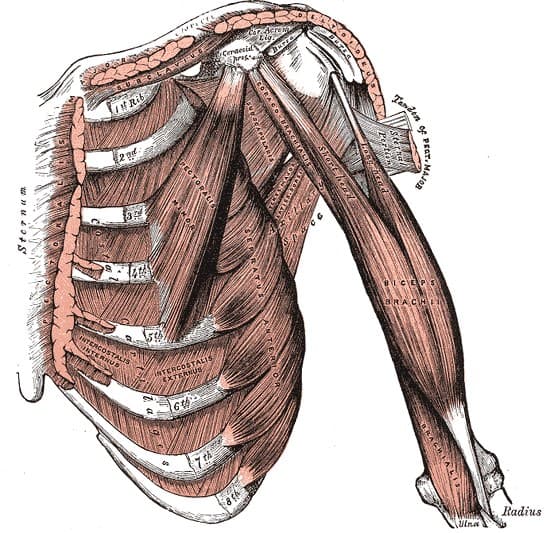
Gynaecomastia is the enlargement of male breast tissue. It is common in puberty, not rare in older age, and frequently mixed with ordinary chest fat. The word is used loosely in advertising. In a clinic it should be used more carefully: is there a firm disc of gland behind the nipple, a pad of subcutaneous fat, loose skin after weight loss, or a combination? Those findings lead to different operations and, more importantly, to different medical work-ups. A request to “just liposuction the chest” is not a diagnosis.
This is a science editor’s explainer, not a recommendation to have surgery. Check the practitioner on the Ahpra register. We do not publish testimonials, and we do not name prescription medicines as if they were products to seek. The surrounding operations are collected in the body contouring hub. Liposuction’s wider limits are covered in what liposuction can and cannot do.
True gland, fat, and the mixed chest
The male breast contains a small amount of ductal tissue behind the nipple–areola complex. Under oestrogen-androgen imbalance, medicines, or residual adolescent stimulation, that tissue can grow into a rubbery disc. The disc is not fat. It does not suction out cleanly. Surgeons describe it as gritty or fibrous when they cut it. Leaving it behind is how a man ends up with a still-projecting nipple on a thinner chest.
Pseudogynaecomastia is fat. It is softer, more diffuse, and usually tracks with overall weight. It may improve if weight changes. It is also the pattern that liposuction can actually address. Many adult presentations are mixed: a central glandular mound with a fatty surround. The physical examination — and, when needed, ultrasound — is how that mix is sorted. Photographs from a phone, taken from above, are a poor substitute.
Skin quality is the third variable. After substantial weight loss the chest skin can hang even if the gland is small. Reduction then becomes a skin operation as well as a gland operation, with longer scars and a different recovery. Treating that chest as a simple liposuction case is how irregularity and a drooping areola are produced.
Unilateral enlargement, a hard or eccentric mass, skin dimpling, nipple inversion or discharge, or enlarged lymph nodes are not cosmetic details. They are reasons to think about breast pathology, including the uncommon but real possibility of male breast cancer, and to investigate rather than to book a contouring slot.
Endocrine screen and the medicine list
Not every man with a long-stable, bilateral, post-pubertal mound needs a full endocrine work-up on the morning of surgery. New enlargement in adulthood, rapid change, testicular symptoms, a history of liver or thyroid disease, or other signs of hormone imbalance do. The ordinary pathway is a GP: history, testicular examination, and blood tests directed at the story — liver function, thyroid, and sex-hormone studies are the names that commonly appear. Referral to an endocrinologist follows when the results or the history warrant it.
The medicine list is part of the same hour. A surprising number of prescribed and non-prescribed substances are associated with gynaecomastia. Anti-androgens, some medicines used for heart failure or prostate disease, some ulcer medicines, anabolic steroids, cannabis, and alcohol in sufficient quantity appear in textbooks. This journal will not turn that list into a brand index. The practical instruction is simpler: bring every packet, including proteins, “testosterone support” supplements and over-the-counter tablets. Stopping a medicine is a decision for the prescribing doctor, not for a cosmetic consult.
Obesity-related aromatisation of androgens to oestrogens is another pathway. In that setting, weight management discussed with a GP may be the first intervention, and surgery the later one if a residual disc remains. Treating a metabolic chest as a weekend liposuction is how disappointment is organised.
Pubertal gynaecomastia often settles over months to a couple of years. Operating on an adolescent without a period of observation, family involvement and a clear medical review is a higher-stakes decision than adult residual tissue. Paediatric and adolescent pathways, where they exist, are the right door.
Excision, liposuction, and why the combination is common
When surgery is appropriate, the technical choice follows the tissue. A discrete glandular disc is usually excised. The conventional access is an incision along the lower border of the areola — a periareolar cut — through which the disc can be delivered. The scar sits in a colour-change line and is still a scar. It can widen, pale, or, in some skin types, become more visible than the original mound. Sensation in the nipple can diminish. The nipple can end up flatter, or, if too much tissue is taken from directly behind it, a depression or “crater” that is harder to fix than the first problem.
Liposuction of the surrounding fat is often added so that the chest does not drop from a central peak to a sharp step. Used alone, suction is a poor tool for firm gland. Used blindly at high volume, it can leave waviness and asymmetry. Energy-assisted variants do not change that anatomy; they change the feel of the pass. Device names are not evidence.
Some men, particularly after massive weight loss or with a very large gland, need more than a periareolar bite. Skin excision, a lift of the nipple–areola, or a pattern borrowed from female breast reduction then enters the conversation. Those scars are longer. They can be the honest price of removing a large envelope. Concealing that fact in order to keep the operation sounding minor is not consent.
Anaesthesia ranges from local anaesthetic with sedation for a small, isolated disc to general anaesthesia for mixed, bilateral, or skin-reducing cases. The setting should match the anaesthetic and the bleeding risk: a licensed day hospital or hospital, not an informal room. Since 2023, cosmetic operations in Australia carry referral and cooling-off expectations that the treating rooms should explain. Gynaecomastia with a documented medical indication is coded differently; it is still not a promise of a particular chest.
Scars, garments and the first month
Men often arrive more anxious about the scar than about the gland, then discover that a faint periareolar line is easier to live with than they feared — or, occasionally, the reverse. Skin of colour can pigment or form a thicker scar. Keloid is uncommon on the chest relative to the sternum and shoulders but is not impossible. Hypertrophic scars happen. Silicone and time are the usual first aftercare; revision is a later conversation, not a week-two rescue. This journal does not show galleries and will not call a scar invisible.
A compression garment or elastic vest is commonly used for a period of weeks to support the raw chest wall and limit swelling. It is uncomfortable in Australian summer and still usually part of the plan. Drains are less universal than in abdominoplasty but appear in larger excisions. Bruising can run into the flanks and abdomen and looks dramatic on a man who has never bruised there before.
Training is the practical question. Many men in these consults lift weights. A return to the gym is staged: walking immediately, light lower-body work later, and pressing movements later still, because pectoral contraction pulls on the chest dissection. The timetable is the operating surgeon’s, not a forum’s. Haematoma — a collection of blood under the chest skin — is the early complication to name. Sudden swelling, severe asymmetry or expanding bruise is a reason to call the team the same day, not after the next scheduled lift.
Infection, contour irregularity, residual gland, over-resection, nipple numbness or necrosis (rare but serious), and the possible need for a further procedure belong on the consent form. Seroma can sit as a soft swelling for weeks. Asymmetry was often present before the operation; surgery can reduce it and can also make a previously ignored difference obvious.
Medicare, titles and the consultation
Some Medicare Benefits Schedule items exist for male breast reduction in defined circumstances after investigation — for example, when glandular tissue is documented and specified criteria are met. Those descriptors are narrow and are amended from time to time. A desire for a flatter chest in the gym mirror is not, by itself, an item number. Private health insurance follows the fund and the coding. Many operations remain self-funded. Ask whether an item is proposed, on what evidence, and what the quote becomes if the claim fails.
“Specialist plastic surgeon” is a protected title for medical practitioners with specialist registration in surgery — plastic surgery. Other registered practitioners may also perform this operation. Read the register. A second opinion is ordinary if the first plan skips the endocrine history and goes straight to a package price.
Bring the medicine list. Ask whether the finding is gland, fat, skin, or mixed, and how that was decided. Ask to feel the disc, if there is one, so the word is not only a slide. Ask where the scar will sit, what happens to nipple sensation, and how a crater deformity is avoided. Ask about the garment, the gym, and who is called after hours. Ask what the surgeon would not try to change — a broad fatty chest in a man who is still losing weight, or a skin envelope that needs a longer scar than he wants to accept.
Gynaecomastia surgery can be a reasonable operation when the tissue has been identified, the medical causes have been thought about, and the scar is an acceptable trade for the mound. It is not a shortcut around an endocrine review, and it is not liposuction by default. Treat the chest as anatomy first. The advertisement can wait.
Questions readers ask
- Is gynaecomastia the same as chest fat?
- Not always. True gynaecomastia is enlargement of breast gland tissue behind the nipple–areola. Pseudogynaecomastia is fat on the chest without a firm glandular disc. Many men have a mixture. The distinction matters because suction alone does not reliably remove gland.
- Why would a surgeon send someone for blood tests first?
- New or one-sided enlargement, nipple discharge, a hard mass, or enlargement that appears with other hormone symptoms can be a medical problem rather than a contour one. An endocrine and medicine review, often through a GP, is the ordinary first step, not a delay tactic.
- Will liposuction be enough?
- Liposuction can reduce chest fat. A firm disc of gland usually needs surgical excision, often through an incision at the edge of the areola. Combining the two is common. Neither method is a guarantee of a flat chest or an invisible scar.
- Does Medicare cover male breast reduction?
- Some MBS items exist for particular clinical situations after investigation. The criteria are specific. Many operations performed for appearance remain private. A website cannot promise a rebate.
More in this hub
Body contouring after significant weight loss
Staging, nutrition and thrombosis risk after massive weight loss, with belt lipectomy, arm and thigh operations described in general terms, and a plain account of public versus private pathways in Australia.
Tom Hale · 10 December 2024
Liposuction: what it can and cannot do
Why liposuction is not a weight-loss method, how fluid shifts and skin quality limit the operation, and why hospital versus office setting and combination surgery change the risk conversation in Australia.
Tom Hale · 26 November 2024
Abdominoplasty after pregnancy or weight loss
A journalist’s explainer on pannus versus muscle separation, hernia, drains and early walking after abdominoplasty — and why Medicare criteria exist in Australia without promising a rebate.
Priya Menon · 12 November 2024